Learn About Our Science

The GATOS science case centers on understanding the physical connection between AGN and their host galaxies, specifically through the processes of gas inflow and feedback-driven outflows.

Research Fields

Torus, Obscuration & Dust Structure

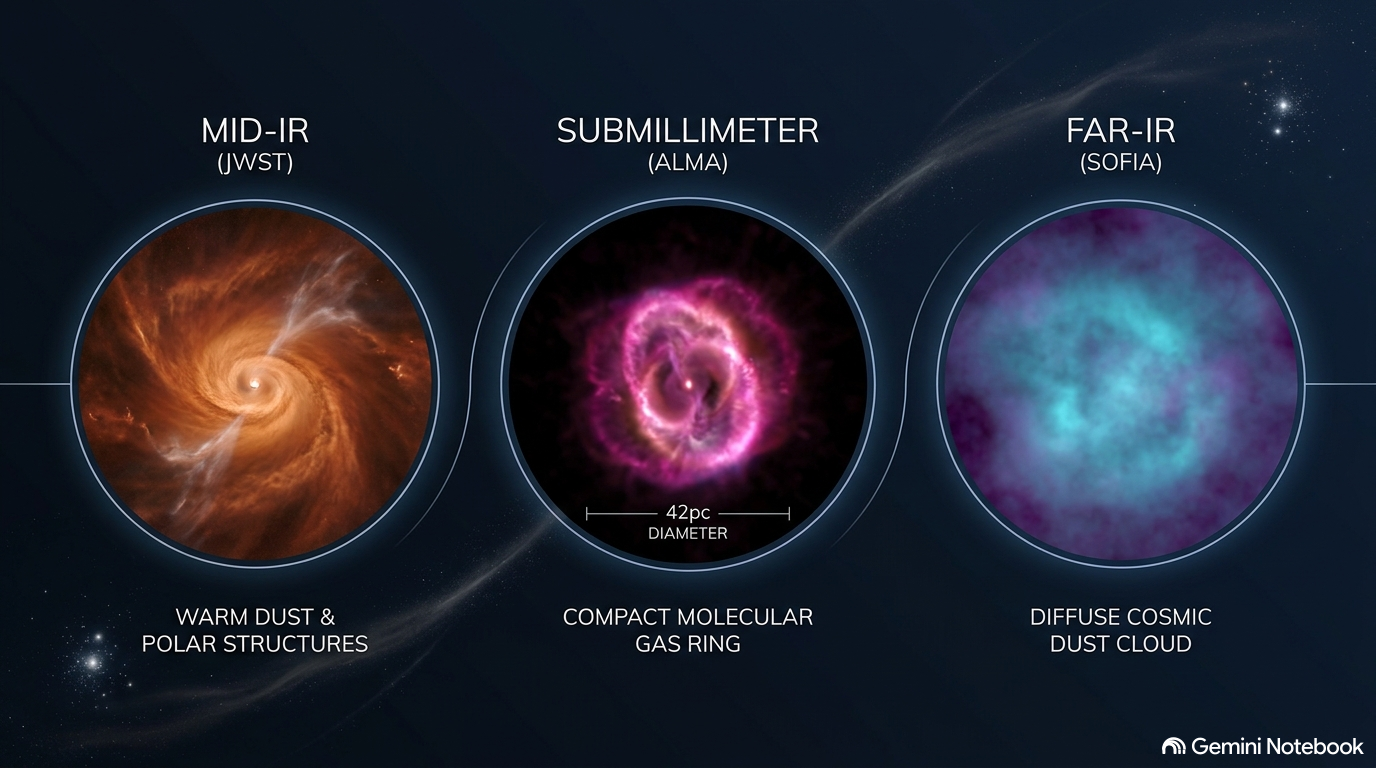
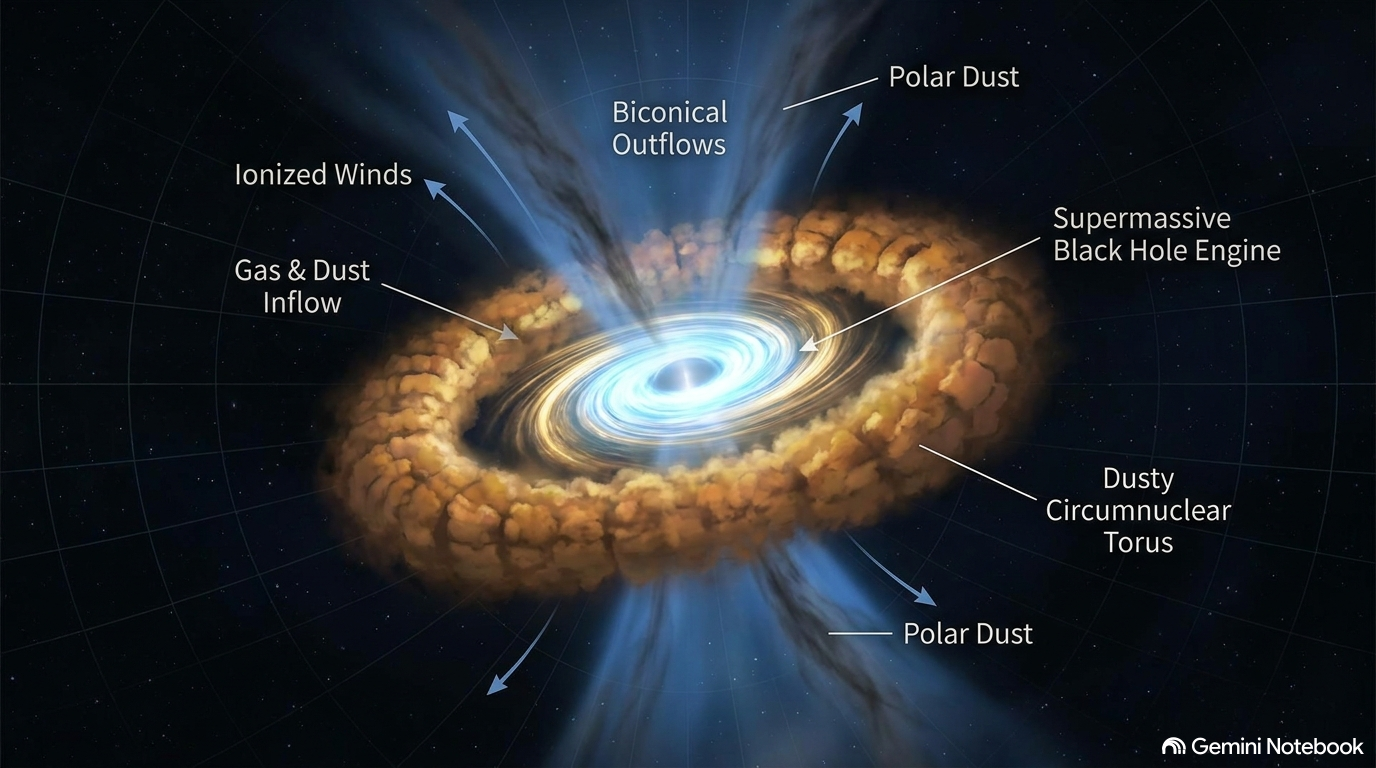
A central goal of GATOS is to resolve the dusty and molecular structures that surround nearby active galactic nuclei (AGN), and to determine how their geometry, composition, and orientation are connected to nuclear obscuration. High-resolution ALMA imaging has revealed compact molecular disks on scales of a few to tens of parsecs, with a median torus diameter of about 42 pc in the original GATOS sample. These observations also show that the molecular structures are commonly oriented approximately perpendicular to the axes of AGN winds, providing a direct link between the circumnuclear gas reservoir and larger-scale feedback (García-Burillo et al. 2021).

GATOS also investigates how this classical equatorial torus connects to polar dust and to the material responsible for line-of-sight obscuration. Mid-infrared observations and radiative-transfer modeling indicate that some Seyfert galaxies host extended polar dust components in addition to compact equatorial emission (Alonso-Herrero et al. 2021). JWST spectroscopy has further opened a new view of the torus chemistry: García-Bernete et al. (2024) detected nuclear water-ice absorption on tens-of-parsecs scales and found that its optical depth correlates with the X-ray absorbing column, linking molecular composition directly to AGN obscuration.
Gas Kinematics, Feeding & Feedback

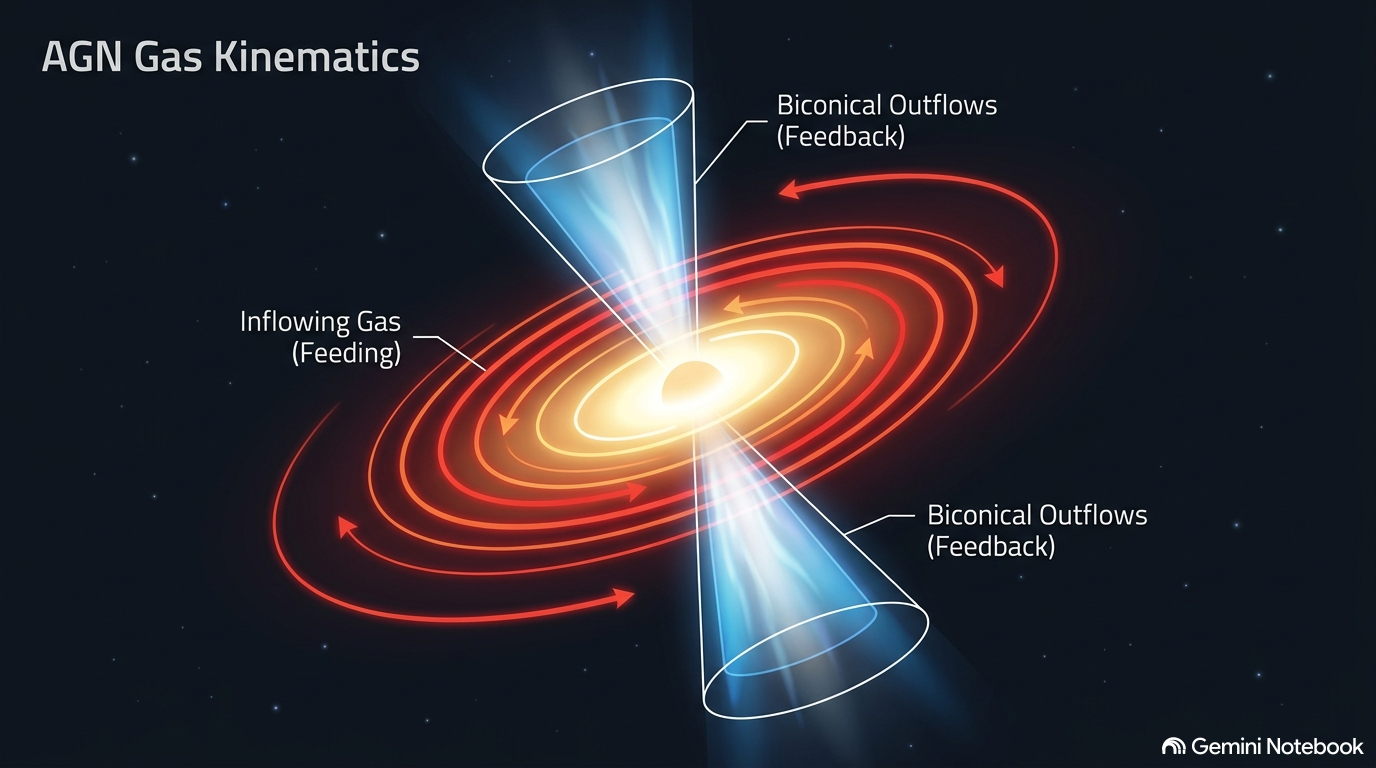
GATOS studies how gas is transported through the central kiloparsec, from inflowing material that can fuel the black hole to outflows that redistribute or remove gas from the nucleus. ALMA and JWST observations are used to separate ordered rotation from radial, non-circular, and outflowing motions in both molecular and ionized gas. Examples include the molecular-gas response to AGN feedback in the ring of NGC 7172 (Alonso-Herrero et al. 2023) and the multiphase outflow of NGC 5506 (Esposito et al. 2024).

The combination of spatially resolved spectroscopy and molecular gas mapping makes it possible to trace feedback across multiple gas phases. In NGC 7172, JWST/MIRI high-ionization neon lines reveal a biconical ionized outflow reaching projected velocities of roughly 350–500 km s−1 (Hermosa Muñoz et al. 2024). In MCG−05−23−16, JWST and ALMA observations instead show molecular-gas stratification, disturbed warm-H2 kinematics, and local inward motions associated with nuclear structure (Esparza-Arredondo et al. 2025). More recent work also suggests that increasing AGN activity may alter the small-scale clumpiness of the molecular ISM (Esposito et al. 2025).

ISM Excitation, PAHs & Shocks

Beyond mapping where gas and dust are located, GATOS aims to identify the physical processes that heat, ionize, and chemically modify the circumnuclear interstellar medium. JWST/MIRI spectroscopy provides access to molecular hydrogen, ionic emission lines, and polycyclic aromatic hydrocarbon (PAH) bands over the same nuclear and circumnuclear regions. These diagnostics can distinguish gas dominated by star formation from material affected by AGN radiation, shocks, or a combination of excitation mechanisms.

PAH studies show that AGN activity can modify the PAH population well beyond the unresolved nucleus, including along projected outflow directions, while the more neutral PAH bands can remain detectable in harsh environments (García-Bernete et al. 2024; Zhang et al. 2024). Warm-H2 observations provide a complementary view of mechanical heating. In NGC 5728, Davies et al. (2024) found shock-heated molecular gas inside the ionization cones even where millimeter CO emission is weak, while Veenema et al. (2025) used JWST/NIRSpec and MIRI spectroscopy to investigate shock-driven heating in the circumnuclear star-forming regions of NGC 7582.

Multiwavelength Nuclear Structure & Emission

A major observational theme in GATOS is determining the physical origin of compact and extended infrared emission around AGN. Combining JWST, ALMA, SOFIA, and other high-angular-resolution facilities allows the morphology of warm dust, cold molecular gas, ionized gas, and star-forming structures to be compared on matched physical scales. The GATOS SOFIA atlas extended this effort across the 20–214 μm range, providing a far-infrared view of nearby AGN structure (Fuller et al. 2025).

JWST has made it possible to resolve faint mid-infrared structures that were previously blended with the nuclear point source, but it has also highlighted the need to separate true dust continuum from emission-line contamination. In ESO 428-G14, extended MIR emission is detected on scales of hundreds of parsecs, while continuum-only emission remains clearly resolved after accounting for line contamination (Haidar et al. 2024). GATOS studies now address this problem systematically, both by investigating the physical origin of extended MIR emission (López-Rodríguez et al. 2025) and by quantifying line contamination in JWST/MIRI imaging (Campbell et al. 2025).

Computational & Analysis Methodology

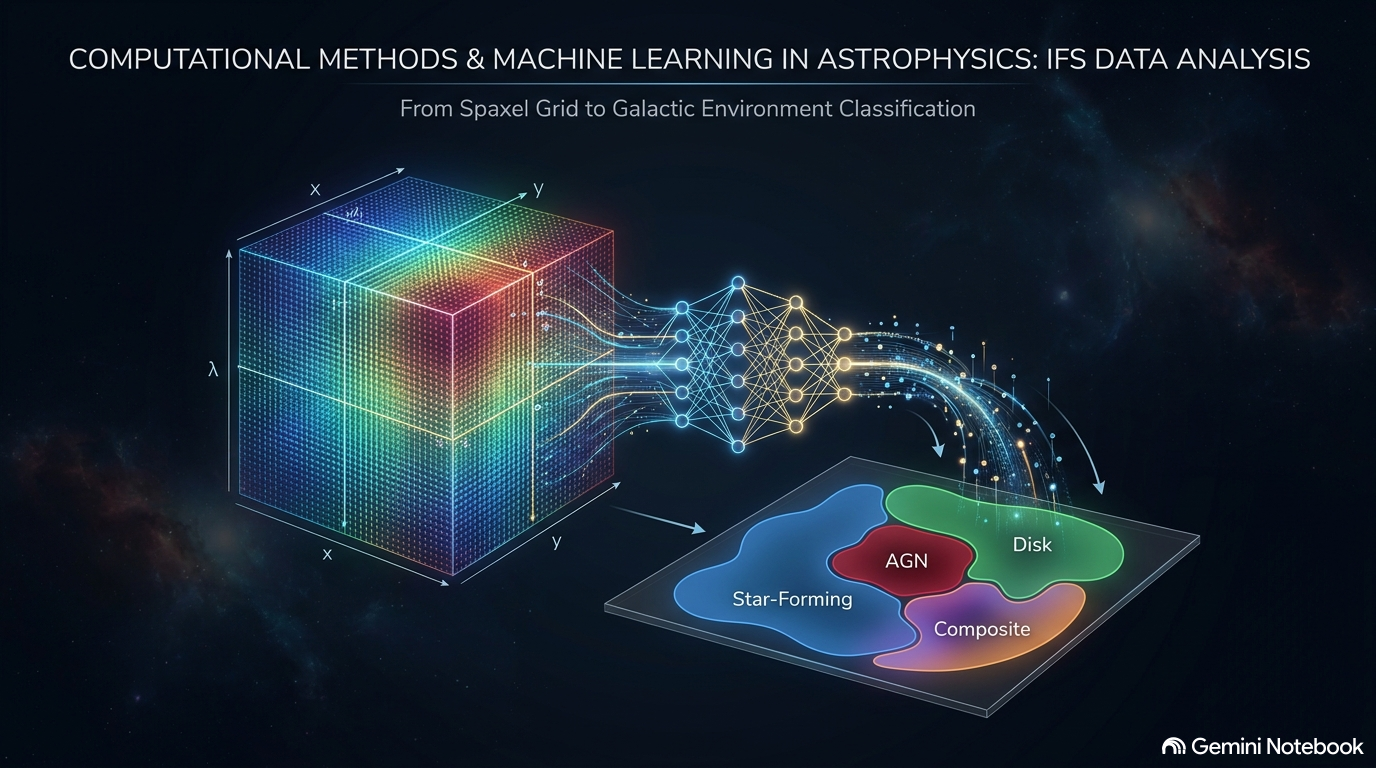
GATOS increasingly develops computational methods alongside its observational programs. These tools are designed for datasets in which complex morphology, large integral-field data cubes, and multiple overlapping physical components make traditional pixel-by-pixel analysis difficult. Image reconstruction, deconvolution, spectral decomposition, and automated classification therefore form an important methodological layer supporting the broader torus, feedback, and ISM science goals.

Machine learning is already being applied directly to GATOS science. Poitevineau et al. (2025) developed a supervised-learning method to estimate black-hole masses from ALMA CO(3–2) position-velocity diagrams and velocity maps using simulated training data. Hermosa Muñoz et al. (2025) applied unsupervised hierarchical clustering to JWST/MIRI MRS cubes, grouping spaxels by spectral similarity and using the resulting regions to distinguish AGN, star-forming, disk, nuclear-starburst, and composite environments. Together, these efforts point toward more automated and physically interpretable analysis of spatially resolved AGN datasets.

Collaborations

Collaborative projects involving GATOS.

PIRATAS

PIRATAS (Panoramic Imaging of Radio Sources in AGN using Transverse Atmospheric Survey) is a project focused on observing radio sources associated with active galactic nuclei (AGN) using a wide-field imaging approach. The collaboration aims to enhance the understanding of the large-scale structure and properties of AGN by utilizing transverse atmospheric survey techniques.

Failed to load.

CAT3D/CAT3D-WIND

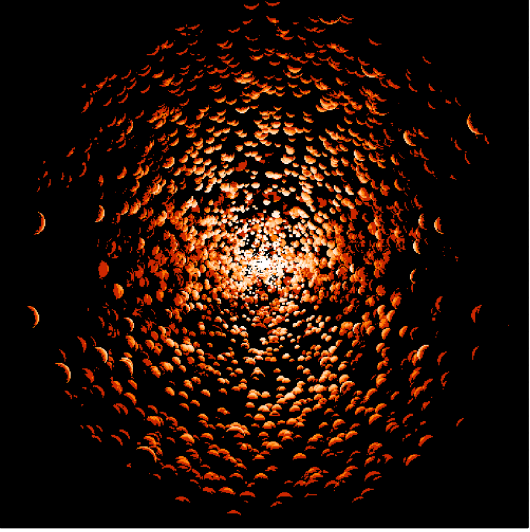
CAT3D (Clumpy AGN Torus Models) is a collaboration that develops and utilizes three-dimensional clumpy torus models to study the infrared emission from the dusty tori surrounding AGN. These models help in interpreting observational data, providing insights into the geometry and physical conditions of the dust in the nuclear regions of AGN.

Failed to load.

SKIRTOR

SKIRTOR (SKIRT-based Torus Models) is a project that uses the radiative transfer code SKIRT to create detailed models of the dusty tori around AGN. These models are used to fit the spectral energy distributions (SEDs) of AGN and to understand the impact of the dusty environment on the observed properties of AGN.

Failed to load.

LLAMA

This is a survey lead by Ric Davies to observe a sample of 39 galaxies.

Failed to load.